For most retailers, payment processing is something they rarely think about.
Transactions are approved, receipts are printed, and customers complete their purchases without interruption. When everything works as expected, the payment system quietly fades into the background.
That is exactly how it should be.
The real test of a payment system is not how it performs when business is running smoothly.
It is how the business responds when something unexpected happens.
Every retailer will eventually experience some form of operational disruption. Internet service may become unstable. Hardware can fail. Software updates may introduce temporary issues. External payment networks occasionally experience interruptions beyond anyone’s control.
The question is not whether problems will ever occur.
The question is whether your business is prepared when they do.
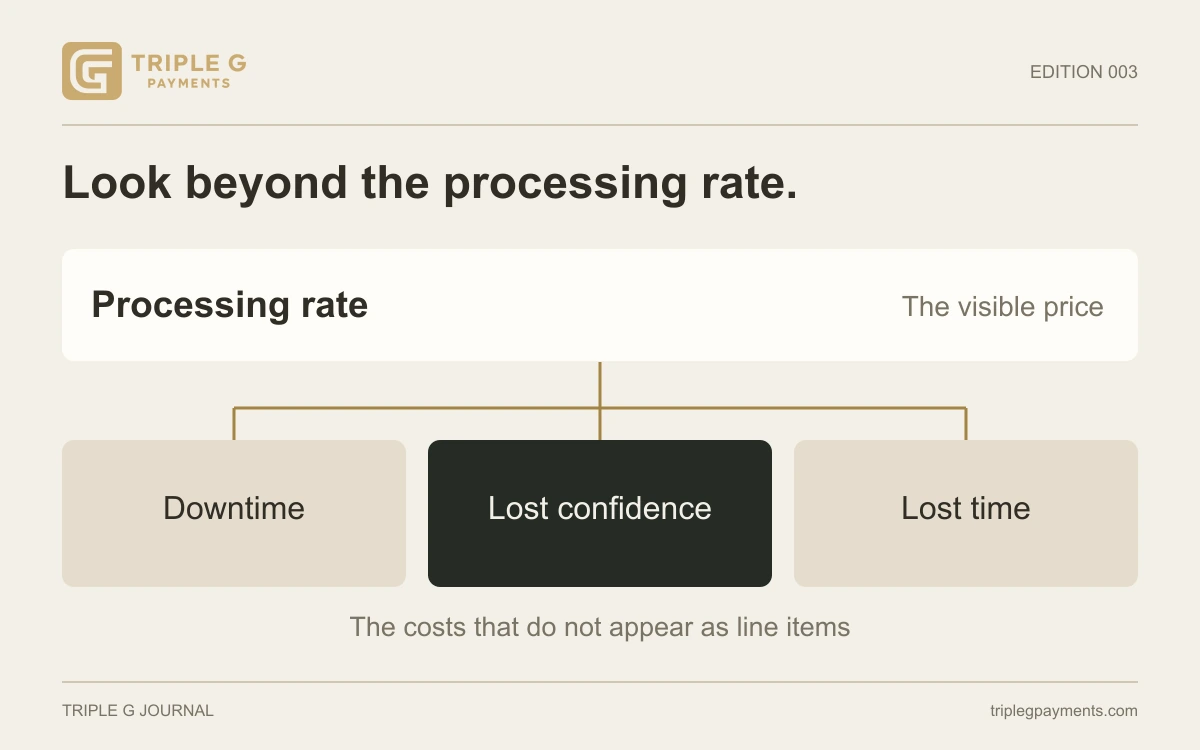
Many retailers think of downtime as a technology problem.
In reality, it quickly becomes a business problem.
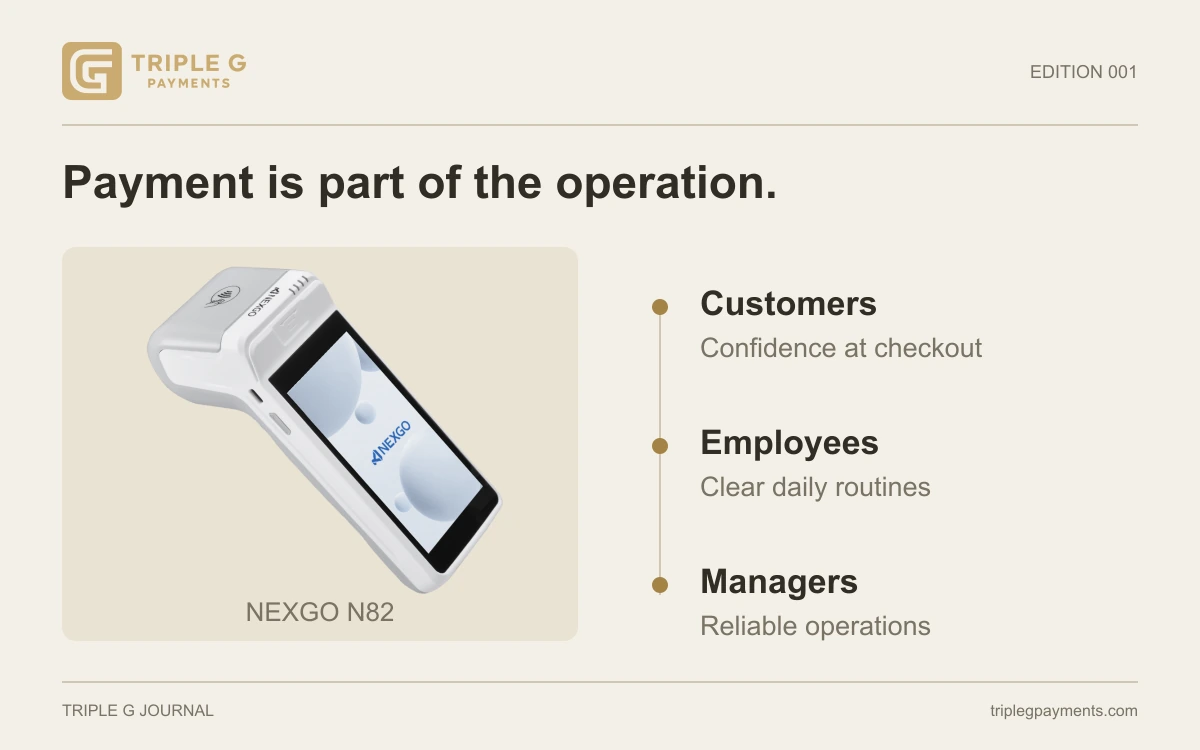
A single interruption can affect employees, customers, managers, and overall operational efficiency within minutes. Revenue slows. Checkout lines grow. Employees become distracted. Customers begin wondering whether to keep waiting or leave.
What begins as a technical issue often becomes a customer experience issue.
That distinction matters.
Because while hardware can usually be repaired, customer confidence is much harder to rebuild once it’s been lost.
Reliable payment infrastructure is not simply about preventing downtime.
It is about minimizing disruption whenever unexpected situations occur.
Business Continuity Begins Before Problems Occur
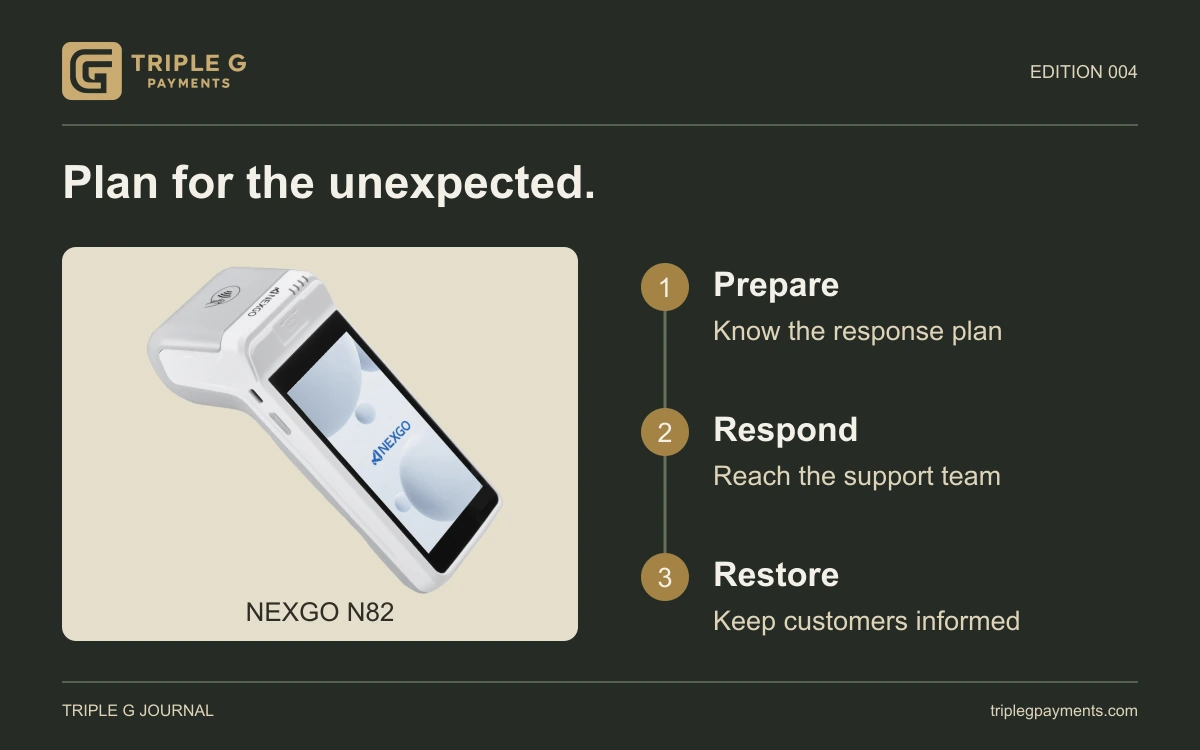
The strongest retail operations don’t wait for something to fail before creating a plan.
They prepare in advance.
Business continuity means understanding exactly what happens if payment processing becomes unavailable and ensuring every employee knows how to respond.
Who should be contacted?
How quickly is support available?
What alternative procedures exist if transactions cannot be processed immediately?
How are customers informed?
Clear answers to these questions reduce confusion during stressful situations.
More importantly, they help employees stay calm and focused instead of trying to solve unfamiliar problems under pressure.
Prepared businesses recover faster because they spend less time deciding what to do and more time executing an existing plan.
Technology plays an important role.
Preparation plays an even larger one.
Every Minute Shapes the Customer Experience
Customers often judge a business by its final interaction.
Checkout is the last impression they take with them after visiting your store.
When that experience feels smooth and professional, customers leave with confidence.
When it feels uncertain or disorganized, that impression often extends beyond the payment itself.
Long waits.
Repeated transaction attempts.
Confusing communication.
Employees who appear unsure how to respond.
None of these moments reflect the quality of your products.
Yet they influence how customers remember your business.
A dependable payment system protects more than revenue.
It protects trust.
Customers understand that unexpected situations happen.
What they remember is how confidently a business responds when they do.
Reliability Creates Operational Confidence
Reliable payment infrastructure gives managers something valuable and hard to measure.
Confidence.
Confidence that employees can continue serving customers.
Confidence that operational disruptions will be resolved quickly.
Confidence that support will be available when it matters most.
Businesses operate differently when they trust the systems supporting them.
Managers spend less time reacting to preventable problems and more time improving the business.
Employees remain focused on customers rather than troubleshooting technology.
The result is a more consistent operation every single day.
Reliability is not simply a technical feature.
It is a competitive advantage that lets businesses perform with greater confidence, no matter what challenges arise.
Operational Resilience Is a Competitive Advantage
The absence of problems does not define reliable businesses.
They are defined by how effectively they continue operating when problems occur.
Every retailer experiences unexpected challenges. Technology evolves. Equipment eventually reaches the end of its lifecycle. Internet connectivity can become unstable. External payment networks occasionally experience interruptions beyond anyone’s control.
Successful operations acknowledge those realities rather than assuming they will never happen.
The difference is preparation.
Retailers that invest in dependable payment infrastructure, responsive support, and clear procedures recover faster when disruptions occur. Their employees remain focused. Their managers maintain control. Their customers continue to feel confident, even in unexpected situations.
Operational resilience is built long before you ever need it.
The Triple G Perspective
When businesses evaluate payment solutions, conversations often focus on features, equipment, and pricing.
Those are important considerations.
But the most valuable question may be much simpler.
Can this system continue supporting my business when something unexpected happens?
Reliable payment technology is not simply about processing transactions.
It is about protecting business continuity.
The strongest payment partners understand that their responsibility extends beyond approving transactions. They help retailers reduce uncertainty with dependable technology, responsive support, and operational guidance that keeps businesses moving forward, no matter the challenge.
Customers rarely remember a flawless transaction.
They immediately remember confusion.
Employees rarely celebrate technology that works perfectly every day.
They notice when it doesn’t.
That is why reliability should never be viewed as an optional feature.
It is a foundation of a professional retail operation.
Every interruption prevented is time returned to employees.
Every customer served without delay strengthens confidence.
Every problem resolved quickly protects the reputation the business has worked hard to build.
That philosophy continues to shape every edition of Triple G Journal.
Because operational excellence is rarely created through dramatic improvements.
It is built through dependable systems that quietly perform exactly as they should, every single day.
Conclusion
Payment systems are designed to process transactions.
The best payment systems do something more.
They help businesses continue operating with confidence.
When unexpected challenges arise, retailers should not be forced to question whether their payment infrastructure will support them. They should already know.
Reliable technology, responsive support, prepared employees, and clear operational processes transform potential disruptions into manageable situations.
That confidence allows managers to lead instead of reacting.
Employees remain focused on customers.
Customers leave with the same positive impression they expected when they walked through the door.
As the cannabis industry continues to mature, operational resilience will become an increasingly important competitive advantage.
Because businesses that perform consistently during challenging moments are often the ones customers trust most.
And in retail, trust is one of the most valuable assets a business can earn.
- Cannabis
- Cannabis Payments
- Payment Downtime
- Payment Processing
- Merchant Services
- Business Continuity
- Retail Operations
- Operational Excellence
- Customer Experience
- Dispensary
Review your current payment program
Put this article to work. Request a payment review and we will evaluate your current rebate, operating fees, transaction volume, and equipment needs.
Request a Payment Review
Triple G Journal publishes educational content for cannabis retail leaders, covering cannabis payments, retail operations, finance, technology, compliance, leadership, and business strategy. Every edition is written and reviewed by the Triple G Payments team.